
Key Points:
- Social skills need direct teaching for children with autism.
- Structured practice builds confidence and meaningful interactions.
- Consistency at home and school strengthens social development.
Why Social Skills Are Challenging for Children with Autism
Research shows that social skills can be challenging for children with autism due to differences in how they process communication and sensory input. Many children on the spectrum struggle to naturally interpret nonverbal cues such as body language, facial expressions, or tone of voice. They may take language literally, find it difficult to follow social rules, or have trouble learning through observation and imitation.
These neurological differences often affect joint attention, the ability to focus on multiple things at once, and make social interactions more complex.
Understanding these challenges is essential for supporting autism social development. Some difficulties include:
Difficulty Interpreting Social Cues: Children with autism may struggle to read and respond to facial expressions, body language, and vocal tones, which can make understanding others’ emotions and intentions difficult.
Differences in Communication: Many children take language literally and may struggle with nuances, humor, or metaphors.
Challenges with Nonverbal Communication: Eye contact, gestures, and facial expressions may not come naturally, making interaction more difficult.
Difficulty with Joint Attention: Focusing on multiple things simultaneously, such as watching a person while engaging with an object, is often challenging but essential for shared play.
Need for Explicit Learning: Neurotypical children often acquire social rules through observation, but children with autism require explicit, detailed instruction.
Sensory and Emotional Overload: Sensory sensitivities and the cognitive effort of navigating social situations can cause stress, reducing a child’s ability to respond in conventional social ways.
Impact of Social Challenges
Social difficulties can affect multiple areas of life:
- Friendship Formation: Many children with autism struggle to form friendships or participate in group activities, which can lead to social isolation.
- Mental Health: The effort required to understand or mask social challenges may contribute to anxiety, depression, and exhaustion.
Understanding that these challenges stem from differences in communication and processing, not a lack of desire to connect, is key to effective support.
Core Strategies for Building Social Skills in Autism
Visual Supports and Social Stories
Use picture cards, checklists, or social stories to outline social expectations. These tools reduce anxiety and improve understanding of social rules.
Role-Playing and Modeling
Act out social scenarios like starting a conversation, taking turns, or inviting peers to join an activity. Provide direct feedback and positive reinforcement.
Structured Play Opportunities
Engage children in structured play with one or two peers, using games that emphasize turn-taking, sharing, and collaborative problem-solving.
Leveraging Special Interests
Incorporate the child’s interests, such as favorite toys, characters, or topics, to motivate social engagement.
Explicit Instruction
Teach social cues directly, including facial expressions, body language, and tone of voice, as these skills often do not develop intuitively.
Targeted Skills to Develop
- Conversation Skills: Teach how to initiate and maintain conversations using scripts or visual flowcharts.
- Turn-Taking and Sharing: Use preferred toys or games to practice waiting and sharing.
- Identifying Emotions: Use books, movies, or real-life situations to ask, “What is that person feeling?” to build perspective-taking skills.
- Initiating Interactions: Encourage inviting peers to play or join group activities.
Environmental and Support Tips
- Peer-Mediated Instruction: Pair children with peers who demonstrate strong social skills to model appropriate behavior naturally.
- Small Groups: Use structured, consistent small groups for practice during meals, play, or activities.
- Prepare beforehand: Review upcoming social situations so children know what to expect.
- Focus on Strengths: Leverage strengths such as humor or memory to build confidence and engagement.
Key Social Skills Activities
- Role-Playing Scenarios: Practice real-life social interactions, like ordering at a store or acting out scenes from books.
- Emotion Recognition Games: Use flashcards, “Feelings Bingo,” or interactive games to identify emotions.
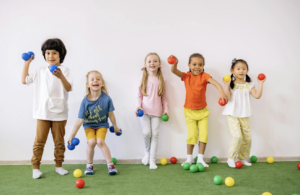
- Structured Turn-Taking Games: Simple board games or ball-passing activities teach waiting and following rules.
- Social Stories & Scripts: Short visual stories model appropriate behavior for specific situations.
- Name Games: Circle games help children learn classmates’ names and build early connections.
- Body Boundary Activities: Use hula hoops to teach personal space visually.
- Eye Contact Games: Fun activities like staring contests or stickers on the forehead can help improve eye contact gradually.
- Empathy Exercises: Questions like “How would it feel to be…” encourage understanding others’ perspectives.
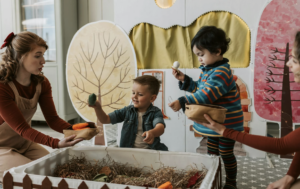
Implementing Social Development at Home
- Visual Supports: Use pictures, flashcards, and props to make abstract social concepts concrete.
- Frequent Practice: Repeat activities multiple times to reinforce understanding.
- Keep Sessions Brief: Short, structured sessions with clear goals help maintain engagement.
- Focus on Interests: Utilize favorite items to encourage sharing and social interaction.
- Structured Routines: Visual schedules increase predictability and reduce anxiety during transitions.
- Individualized Learning: Tailor activities to the child’s strengths to foster achievement and motivation.
Supporting Social Development at School
- Peer Mentoring/Groups: Facilitate small-group activities or buddy systems for controlled social interaction.
- Sensory Accommodations: Provide quiet spaces or sensory tools to help children feel comfortable socializing.
- Proactive Support: Use “About Me” sheets to inform teachers of triggers, strengths, and communication styles.
- Clear Social Rules: Teach and reinforce social skills explicitly, including joining games and recognizing bullying.
Fostering Social Skills in the Community
- Gradual Exposure: Introduce new environments slowly to prevent overwhelm.
- Structured Community Activities: Engage in guided activities like art or swimming classes for social practice.
- Practice Social Scripts: Rehearse interactions for common situations, such as ordering food or greeting neighbors.
Consistency is Key
To maximize progress in autism social development, maintain consistent strategies across home, school, and community settings. Collaboration between parents, therapists, and educators ensures a supportive environment where children can build social skills confidently and successfully.
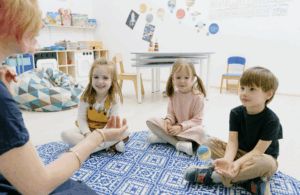
Building Confidence Through Speech & Social Learning At Blossom Kidz Academy
At Blossom Kidz Academy, our communication and social skills program helps children strengthen both expressive and receptive language while learning how to connect meaningfully with others. We go beyond speech to support skills like eye contact, body language, listening, and emotional understanding. In a safe, encouraging environment, children can practice without pressure, building confidence that carries into all areas of life.
Group Activities That Encourage Peer Interaction
Social learning is part of everyday life in our classrooms. Through structured group activities, children practice real-world social skills in a fun and supportive way. Activities include circle time discussions, small group projects, guided social games, and peer modeling. With support from educators and therapists, students learn how to take turns, communicate needs, join group activities, and navigate simple conflicts.
For children with autism or social communication challenges, these structured interactions help build not just skills, but meaningful connections and friendships.
How We Measure Progress in Communication Skills
Every child’s journey is unique, so we use individualized and consistent methods to track progress. This includes speech and language evaluations, classroom observations, progress reports, and regular parent-teacher collaboration.
For nonverbal or minimally verbal children, we support alternative communication methods such as sign language, PECS, or AAC devices. Even small milestones, like a gesture or eye gaze, are recognized as important progress.
Families play a key role in reinforcing these skills at home, creating consistency that supports faster, more natural development. Our goal is not just communication, but helping children feel understood, build relationships, and express themselves with confidence.
Discover how our nurturing environment can transform communication and social skills. Connect with our team today to create a personalized plan tailored to your child’s unique needs.
FAQs
- Why are social skills difficult for children with autism?
Children with autism often process communication and sensory input differently, which can make it harder to interpret body language, facial expressions, and tone of voice. They may also need explicit instruction rather than learning social behaviors through observation.
- How can I improve my child’s social skills at home?
You can support social skills autism development by using visual supports, practicing role-playing, encouraging turn-taking games, and incorporating your child’s interests into social activities. Consistency and repetition are key.
- What are the most important social skills for children with autism to learn?
Key skills include initiating and maintaining conversations, understanding emotions, taking turns, sharing, and interpreting social cues. These foundational skills support overall autism social development.
- How do social stories help children with autism?
Social stories provide clear, visual examples of social situations and appropriate responses. They help children understand expectations, reduce anxiety, and build confidence in navigating social interactions.
- Can children with autism develop meaningful friendships?
Yes, with the right support and structured opportunities, children with autism can build meaningful friendships. Teaching social skills in a supportive environment helps them connect, communicate, and engage with peers.
- What role do schools play in autism social development?
Schools provide structured environments where children can practice social skills through peer interaction, group activities, and guided support. Educators can also implement strategies like small groups and peer mentoring to encourage engagement.
- How does Blossom Kidz Academy support social skills development?
Blossom Kidz Academy uses a structured, individualized approach that combines speech and social learning, group activities, and ongoing progress tracking. Their supportive environment helps children build communication skills, confidence, and meaningful social connections.