

Quick Summary
- School anxiety and autism often overlap, especially in loud or unpredictable classrooms.
- Blossom Kidz Academy builds sensory-friendly spaces that ease daily stress.
- Small, structured routines help children feel calm and ready to learn.
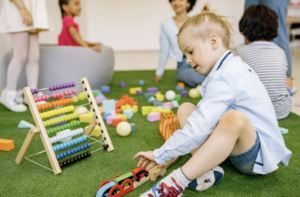
Watching your child dread school each morning is hard on any parent. For many children with autism, school anxiety builds from sensory overload, unpredictable routines, or classrooms that move faster than they can process. At Blossom Kidz Academy, we designed our school around a different approach, one built to reduce that stress before it starts.
Below are six ways our team supports children facing autism anxiety at school, along with what makes our approach different.
1. Sensory-Friendly Classrooms Reduce Daily Overwhelm
Sensory anxiety in the classroom often comes from small details a typical classroom overlooks. Bright lighting, background noise, and cluttered walls can overwhelm a child before the school day even begins.
Our sensory-friendly classrooms in Yuma feature soft, adjustable lighting that reduces glare and harsh brightness. We use calming color palettes and minimal visual clutter to create spaces that lower sensory overload from the moment a child walks in.
Our classrooms include:
- Soft, adjustable lighting instead of harsh overhead fluorescents
- Calming color schemes with minimal visual clutter
- Tactile materials such as sensory bins and textured wall panels
- Fidget tools available for safe, grounded sensory exploration
2. Calm Corners Give Children a Place to Reset
An autistic child struggling at school often needs a moment to step back before returning to a task. Without that option, small frustrations can build into bigger meltdowns.
Our classrooms include calm corners, designated spaces equipped with cozy seating, weighted items, and sensory tools. These areas let children take short breaks when they feel overwhelmed, then return to learning once they feel steady again. Over time, children begin to recognize their own signals and use these spaces on their own, an important step toward self-regulation.
3. Predictable Routines Lower Everyday Stress
School avoidance in autism often connects to unpredictability. A child who cannot guess what comes next may feel anxious from the moment they arrive.
At Blossom Kidz Academy, predictable routines run through every part of the school day. Visual schedules and consistent transitions help children understand what to expect, which lowers anxiety and builds a sense of control.
| Support Tool | What It Does |
| Visual schedules | Shows children what comes next throughout the day |
| Consistent transitions | Reduces surprise and eases movement between activities |
| Calm redirection | Guides behavior without punishment or added stress |
| Token systems | Reinforces positive choices with clear, visible progress |

4. Positive Behavior Support Builds Trust, Not Fear
At Blossom Kidz Academy, we treat behavior as a form of communication. Our team focuses on understanding what a child expresses through their actions rather than simply correcting the behavior itself. This shift changes how children experience school anxiety support day-to-day.
Our educators and behavior specialists use:
- Visual supports and schedules that clarify expectations
- Token systems and reward charts that celebrate progress
- Calm redirection that teaches appropriate responses
- Predictable routines that reduce anxiety throughout the day
These strategies build trust and independence over time. Students begin to take pride in their choices, understanding that positive actions lead to positive outcomes. Every behavior plan stays personalized, whether a child needs gentle reminders, visual prompts, or scheduled sensory breaks.
5. Therapists Work Directly Inside the Classroom
A supportive school environment for autism goes further when therapy and education work together instead of staying separate. Our autism education program includes close collaboration with occupational and behavioral therapists throughout the school day.
Occupational therapists help students build sensory processing skills, fine motor abilities, and self-care independence. They often recommend classroom adaptations such as fidget tools, weighted vests, or flexible seating to support comfort and focus.
Behavioral therapists help children learn coping strategies, recognize triggers, and express emotions more clearly. Together with our educators, they design individualized plans that support calm, consistent behavior across the day. Parents stay included in this process, receiving updates and strategies to reinforce progress at home.
6. Every Plan Reflects the Individual Child
Special needs school support only works when it fits the specific child in front of the teacher. Our team builds personalized plans through our developmental delays program and full-day support program, adjusting strategies as each child grows and changes.
No two children experience school anxiety the same way. Some need more sensory breaks, while others respond best to visual supports or extra transition time. Our team adapts constantly, guided by close communication between educators, therapists, and families.
Signs Your Child May Be Struggling With School Anxiety
Parents often notice these patterns before a formal conversation happens:
- Resistance or tears before school, especially on certain days
- Physical complaints like stomachaches with no clear cause
- Meltdowns after school once the pressure of the day releases
- Avoiding certain activities, sounds, or areas of the classroom
- Difficulty transitioning between tasks or settings
If these sound familiar, a calmer, more structured environment may help. Learn more about who we support at Blossom Kidz Academy.
Common Questions Parents Ask Us
- How does Blossom Kidz Academy reduce sensory overload in classrooms?
We use adjustable lighting, calming colors, minimal clutter, and tactile tools to reduce sensory triggers throughout the school day.
- What is a calm corner?
A calm corner is a designated space with cozy seating and sensory tools where a child can take a short break to reset before returning to class.
- Does Blossom Kidz Academy work with occupational and behavioral therapists?
Yes. Our team collaborates closely with both to build classroom adaptations and individualized behavior plans.
- How are behavior plans personalized?
Every plan reflects a child’s specific triggers and needs, whether that means visual prompts, sensory breaks, or gentle reminders.
- Can parents stay involved in behavior strategies?
Yes. Parents receive regular updates and suggestions for reinforcing positive habits at home.
- Does ESA funding apply to enrollment at Blossom Kidz Academy?
Yes. Families can use ESA-funded educational services to help cover tuition.
Schedule a Tour to See Our Sensory Spaces
Seeing a classroom often answers more questions than any conversation can. If school anxiety has been weighing on your family, we invite you to visit Blossom Kidz Academy and see our sensory spaces in person.
Call us at (928) 975-0820, email Info@blossomkidzacademy.com, or fill out our contact form to schedule your tour, and our team will reach out to set a time that works for you.